
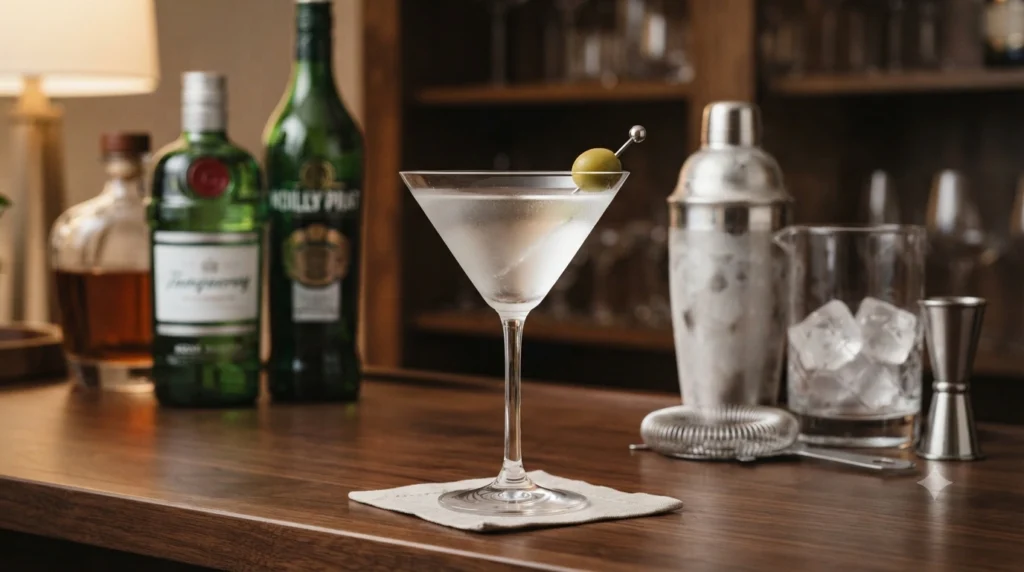
Classic Martini Recipe: How to Make a Smooth, Balanced Martini at Home.
Introduction
A classic Martini recipe is surprisingly simple: combine gin with dry vermouth, chill the mixture thoroughly with ice, strain it into a chilled cocktail glass, and finish with an olive or lemon twist. The International Bartenders Association’s Dry Martini recipe uses 60 ml of gin and 10 ml of dry vermouth, stirred with ice and strained before garnishing.
What makes a Martini interesting is not the number of ingredients but how much those ingredients matter. The gin, vermouth, temperature, dilution, ratio and garnish can all change the final drink.
There is also no single universally accepted Martini ratio. Modern recipes range from relatively vermouth-forward versions to very dry preparations with only a small amount of vermouth. Liquor.com notes that ratios commonly vary from around 2:1 to 5:1, while the IBA’s current Dry Martini specification is approximately 6:1.
This guide explains how to make a classic Martini, how to adjust it to your taste, why stirring is traditional, which garnish to choose, and how popular variations differ.
Quick Answer: How Do You Make a Martini?
For a straightforward classic Dry Martini, use:
| Ingredient | Amount |
|---|---|
| Gin | 60 ml |
| Dry vermouth | 10 ml |
| Ice | Enough for stirring |
| Garnish | Lemon twist or green olive |
Method: Add gin and dry vermouth to a mixing glass filled with ice. Stir until thoroughly chilled, then strain into a chilled Martini or cocktail glass. Express a lemon peel over the surface or garnish with a green olive.
Key Facts
- Preparation: Stirred
- Style: Spirit-forward
- Main spirit: Traditionally gin
- Modifier: Dry vermouth
- Glass: Chilled cocktail/Martini glass
- Common garnishes: Lemon twist or olive
- Main adjustment: Gin-to-vermouth ratio
- Alternative: Vodka can be used instead of gin
- Classic variation: Dirty Martini with olive brine
- More vermouth-forward option: 50/50 Martini
What Is a Martini?
A Martini is a classic cocktail traditionally made with gin and vermouth, although vodka is now a common alternative.
The drink has evolved significantly over time. Early Martini-style cocktails were generally sweeter and used larger quantities of vermouth. Modern Dry Martinis typically contain much less vermouth and emphasize the base spirit.
The exact origin of the Martini remains disputed. Cocktail historians have proposed several theories, and the drink’s history cannot be reduced to one definitively proven creation story.
What is much clearer is how flexible the Martini became.
Drinkers can adjust:
- Gin or vodka
- Dry or wetter ratios
- Garnish
- Olive brine
- Bitters
- Serving temperature
- Glassware
That flexibility is one reason Martini orders can sound surprisingly specific at a cocktail bar.
Classic Martini Ingredients
A traditional Dry Martini does not require a long shopping list.
1. Gin
Gin provides the main flavor and alcohol base.
A London Dry-style gin is a common choice because its juniper-forward character works naturally with dry vermouth. However, different gins can produce noticeably different results.
A citrus-forward gin may make the Martini brighter.
A floral gin can make it softer and more aromatic.
A strongly juniper-driven gin can create a more traditional, assertive profile.
2. Dry Vermouth
Dry vermouth is a fortified wine with herbal and botanical flavors.
Although it is used in a relatively small quantity in many modern Martinis, it has a major influence on the drink.
Using less vermouth makes the cocktail more spirit-forward.
Using more vermouth produces a softer, more aromatic and less aggressively dry Martini.
This is why simply calling a Martini “dry” does not tell you exactly how much vermouth it contains. Ratios vary considerably between recipes and bars.
3. Ice
Ice does two jobs:
- It chills the cocktail.
- It adds controlled dilution.
Large, solid ice is generally useful for stirring because it chills the drink efficiently without melting as rapidly as small, broken pieces.
4. Garnish
The two classic choices are:
- Lemon twist
- Green olive
The garnish is not merely decorative.
A lemon peel adds aromatic citrus oils, while an olive contributes a savory, briny character.
The IBA specifically lists lemon oil or a green olive as the garnish for its Dry Martini.
Classic Martini Recipe
Ingredients
Makes 1 cocktail
- 60 ml gin
- 10 ml dry vermouth
- Ice
- Lemon peel or green olive
This follows the current IBA Dry Martini specification.
Equipment
You will need:
- Mixing glass
- Bar spoon
- Strainer
- Chilled cocktail or Martini glass
- Vegetable peeler or citrus knife if using a lemon twist
How to Make a Martini Step by Step
Step 1: Chill the Glass
Put your Martini glass in the freezer for a few minutes, or fill it with ice and cold water while preparing the cocktail.
A cold glass helps the drink remain chilled after straining.
Step 2: Add Gin and Vermouth
Pour:
- 60 ml gin
- 10 ml dry vermouth
into a mixing glass.
Step 3: Add Ice
Fill the mixing glass with plenty of ice.
You want enough ice to cool the liquid efficiently while stirring.
Step 4: Stir
Stir the drink smoothly until it is thoroughly chilled.
The IBA specifically instructs bartenders to stir the ingredients with ice before straining.
Stirring also produces the clear, silky texture traditionally associated with a spirit-forward Martini.
Step 5: Strain
Strain the chilled cocktail into your prepared glass.
Avoid allowing loose pieces of ice into the finished drink.
Step 6: Garnish
For a citrus version, express the oils from a lemon peel over the drink and add the peel.
For a savory version, add a green olive.
Your classic Martini is ready to serve.
Why Martini Ratios Matter
One of the biggest Martini debates is the correct gin-to-vermouth ratio.
The truth is that there is no single ratio that defines every modern Martini.
Liquor.com notes that contemporary recipes can range from approximately 2:1 to 5:1 gin-to-vermouth, while the IBA’s Dry Martini specification uses 60 ml gin and 10 ml vermouth.
1:1 — 50/50 Martini
Equal parts gin and dry vermouth create a much more vermouth-forward drink.
Liquor.com describes the 50/50 Martini as a lower-alcohol, less dry style with equal quantities of gin and dry vermouth.
2:1
This gives vermouth a significant role while maintaining the gin’s presence.
It can be a useful starting point for people who find very dry Martinis too intense.
5:1
This creates a noticeably drier, more spirit-forward drink.
6:1
The current IBA Dry Martini specification is approximately 6:1, using 60 ml gin and 10 ml dry vermouth.
Bone-Dry
“Bone-dry” generally indicates extremely little or no vermouth.
However, ordering terminology can vary between bars, so it is better to state exactly what you want if the ratio matters to you.
How to Choose Gin for a Martini
The gin you select can dramatically affect the cocktail.
London Dry Gin
This is a classic choice.
It generally provides a strong juniper profile and a crisp, dry character.
Contemporary Gin
Modern gins can emphasize:
- Citrus
- Floral notes
- Herbs
- Spices
- Cucumber
- Fruit
These can produce a softer or more unusual Martini.
A Simple Starting Point
If you are making your first classic Martini, choose a gin that you already enjoy drinking.
The Martini contains very few ingredients, so there is nowhere for an unpleasant base spirit to hide.
How to Choose Dry Vermouth
Dry vermouth deserves more attention than it often receives.
Because Martini recipes use vermouth as a relatively small component, some people treat it as an afterthought.
That can be a mistake.
A fresh, aromatic dry vermouth can make the cocktail more balanced and interesting.
Storage Matters
Vermouth is wine-based, so it should not be treated exactly like a bottle of gin.
Once opened, keeping it refrigerated helps preserve its quality.
If your vermouth has been sitting open for a long time, taste it before using it in an otherwise expensive Martini.
Stirred vs Shaken Martini
“Shaken, not stirred” is strongly associated with Martini culture, but stirring is the traditional technique for many classic versions.
The IBA Dry Martini recipe specifically calls for stirring.
Why?
A Martini is made almost entirely from alcoholic ingredients.
Stirring chills and dilutes the drink while maintaining a clear, silky texture.
Liquor.com similarly explains that stirring is generally preferred for spirit-only cocktails such as Martinis and Manhattans when a smooth texture is desired.
Does That Mean You Should Never Shake One?
Not necessarily.
Some Martini variations and personal preferences favor shaking.
A famous example is the cinematic tradition associated with James Bond.
But if your goal is a classic, clear and silky Dry Martini, stirring is the straightforward choice.
Olive or Lemon Twist?
This is one of the easiest ways to personalize the drink.
Lemon Twist
Choose a lemon twist if you want:
- Bright citrus aroma
- A cleaner finish
- A more aromatic presentation
Expressing the peel over the drink releases citrus oils onto the surface.
Olive
Choose an olive if you prefer:
- Savory flavors
- Briny notes
- A slightly richer impression
The IBA lists either lemon oil or a green olive for its Dry Martini.
Dirty Martini
A Dirty Martini goes one step further by adding olive brine.
The brine introduces saltiness and makes the cocktail taste more savory.
Popular Martini Variations
The classic formula is a starting point rather than a fixed endpoint.
50/50 Martini
This version uses equal parts gin and dry vermouth.
It is more vermouth-forward and generally less spirit-heavy than a Dry Martini.
Dirty Martini
Olive brine is added to the Martini.
The amount can vary depending on how salty you want the drink.
Gibson
A Gibson uses gin and dry vermouth but is distinguished by its pickled cocktail onion garnish rather than an olive or lemon twist.
Reverse Martini
The proportions are flipped so that dry vermouth becomes the larger component and gin plays a supporting role.
One modern recipe uses 2 ounces of dry vermouth and 1 ounce of gin.
Vodka Martini
Vodka can replace gin.
The resulting cocktail has a more neutral base, allowing the vermouth and garnish to play a larger role.
Common Martini Mistakes
Using Too Little Ice
Insufficient ice can make it difficult to chill the drink properly.
Fill the mixing glass generously.
Overlooking Vermouth Quality
The vermouth is part of the recipe, not simply a symbolic ingredient.
Making It Too Warm
A Martini should be properly chilled before serving.
Chill the glass and stir the ingredients thoroughly with ice.
Over-Stirring Without Purpose
The objective is not simply to stir for as long as possible.
You want enough stirring to chill and dilute the drink appropriately.
Using a Huge Glass
Large Martini glasses can make a cocktail warm quickly.
A moderately sized chilled glass is often easier to manage.
Treating “Dry” as a Universal Measurement
Dry can mean less vermouth, but different bars and recipes interpret the term differently.
If you are ordering one, specify your preferred ratio if you have a strong preference.
How to Make a Better Martini at Home
1. Chill Everything
A cold glass and cold ingredients help maintain the drink’s temperature.
2. Use Good Ice
Avoid ice that has absorbed strong freezer odors.
3. Measure the Ingredients
A jigger makes it much easier to reproduce a Martini you enjoyed.
4. Experiment With Ratios
Try:
- 2:1
- 3:1
- 5:1
- 6:1
- 1:1
Keep notes about which version you prefer.
5. Try Both Garnishes
Make the same Martini twice—one with lemon and one with olive.
The difference can be surprisingly noticeable.
6. Keep Vermouth Fresh
Store opened vermouth appropriately and replace it when its flavor becomes stale.
7. Don’t Chase a “Perfect” Ratio
The Martini is highly customizable.
The best ratio for one drinker may be completely different from another’s preference.
Is a Martini a Strong Cocktail?
Yes. A classic Martini is a spirit-forward cocktail, and its alcohol content can be substantial.
Unlike cocktails built with large amounts of juice, soda or other non-alcoholic mixers, a Martini is primarily composed of gin or vodka and vermouth.
The exact strength depends on:
- Spirit strength
- Gin-to-vermouth ratio
- Serving size
- Amount of dilution
- Number of drinks consumed
Because of that, a Martini should be approached like other strong cocktails rather than a light mixed drink.
Drink responsibly, know your limits, and do not drive after drinking.
Who Is This Martini Recipe Best For?
Gin Lovers
The classic Dry Martini is particularly suited to people who enjoy botanical, juniper-forward spirits.
Cocktail Beginners
Despite its sophisticated reputation, the recipe itself is simple.
The real learning comes from understanding balance, dilution and ratios.
Home Bartenders
It requires relatively few ingredients and can be made without complicated equipment.
Cocktail Enthusiasts
The Martini offers almost endless opportunities to experiment with:
- Different gins
- Vermouths
- Ratios
- Garnishes
- Bitters
- Preparation techniques
Frequently Asked Questions
What is the best classic Martini recipe?
A reliable classic starting point is 60 ml gin and 10 ml dry vermouth, stirred with ice and strained into a chilled cocktail glass. Garnish with lemon oil or a green olive. This follows the IBA’s current Dry Martini specification.
Should a Martini be shaken or stirred?
A classic Martini is generally stirred. Stirring chills and dilutes the drink while helping maintain a clear, silky texture. The IBA’s Dry Martini recipe specifically calls for stirring.
What is the difference between a Dry Martini and a 50/50 Martini?
A Dry Martini contains considerably more gin than dry vermouth, while a 50/50 Martini uses equal parts gin and dry vermouth. The 50/50 version is therefore more vermouth-forward and generally less dry.
Is gin or vodka better for a Martini?
Neither is universally better. Gin produces a more botanical and juniper-driven cocktail, while vodka creates a more neutral base. Your preference should determine which one you use.
What garnish goes in a Martini?
The classic choices are a lemon twist or green olive. A lemon twist adds citrus aroma, while an olive contributes savory and briny character.
What makes a Martini “dirty”?
A Dirty Martini includes olive brine, which adds saltiness and a savory flavor to the cocktail.
How much vermouth should I use in a Martini?
It depends on your preferred style. The IBA currently specifies 60 ml gin and 10 ml dry vermouth, while other respected recipes use ratios such as 2:1, 3:1, 5:1 or equal parts.
Can I make a Martini with vodka?
Yes. Vodka Martinis are a well-established variation. Vodka gives the drink a more neutral flavor profile than gin, allowing the vermouth and garnish to become more prominent.
Conclusion: A Martini Is Simple, but the Details Matter
A good Martini recipe does not require a long list of ingredients or complicated equipment. The classic formula is remarkably straightforward: gin, dry vermouth, ice and a garnish.
The current IBA Dry Martini specification uses 60 ml gin and 10 ml dry vermouth, with the ingredients stirred over ice and strained into a chilled cocktail glass. Lemon oil or a green olive completes the drink.
What makes the Martini more interesting is how easily that basic formula can change.
Use more vermouth for a softer, more aromatic drink. Reduce it for a drier, more spirit-forward version. Choose an olive for savory character or lemon for citrus aroma. Try gin for botanical complexity or vodka for a cleaner profile.
There is no need to treat one ratio as the only legitimate Martini. Cocktail history itself shows that the drink has evolved considerably, and modern recipes continue to interpret the classic in different ways.
For a first attempt, start with the IBA recipe, keep everything cold, stir carefully, and taste the result. Once you understand the basic balance, adjusting the Martini to your own preference becomes much easier.
Pingback: BaddieHub Explained: Safety, Privacy, Legitimacy & More.
Pingback: Voozon.com Explained: Guest Posts, SEO Value & Safety.