
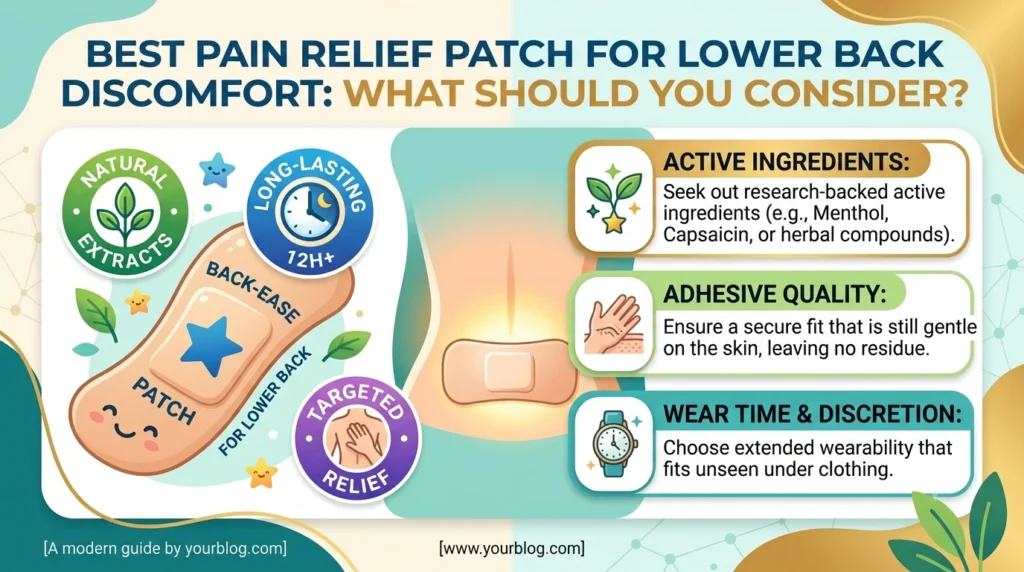
Best Pain Relief Patch for Lower Back Discomfort: What Should You Consider?
Introduction
Lower back discomfort can make everyday activities surprisingly difficult. Sitting at a desk, standing for long periods, lifting household items, exercising or even getting out of bed may become uncomfortable when your back feels stiff or sore. For people looking for a convenient way to manage minor aches, a pain relief patch for the lower back may be worth considering.
However, choosing the right product is not simply about finding the patch with the strongest ingredients or the most attractive packaging. Different products work in different ways. Some contain topical pain-relieving ingredients, others provide heat or cooling sensations, and Japanese press-needle patches use a different approach inspired by traditional acupuncture practices.
The best pain relief patch for lower back discomfort depends on your symptoms, skin sensitivity, health circumstances and the product’s intended use. It is also important to understand that a patch may provide temporary comfort without treating the underlying cause of back pain.
This guide explains what to consider before buying a patch, how common options compare, which safety precautions matter and when professional medical advice may be necessary.
Quick Answer: How Do You Choose a Pain Relief Patch for Lower Back Discomfort?
Before choosing a product, compare its type, ingredients, application instructions and safety information.
| What to consider | Why it matters |
|---|---|
| Type of patch | Medicated, heat-based, cooling and press-needle patches work differently |
| Active ingredients | Ingredients determine the product’s intended use, potential benefits and risks |
| Patch size | The product should fit the intended application area comfortably |
| Skin sensitivity | Adhesives and active ingredients may cause irritation or allergic reactions |
| Wear time | Each product has specific application and removal instructions |
| Health conditions | Pregnancy, allergies, medicines and implanted devices may affect suitability |
| Cause of discomfort | A patch may not be appropriate for nerve-related pain, injuries or other medical conditions |
The main takeaway: Choose a patch based on your individual needs and the manufacturer’s instructions, not simply on which product is advertised as the best. Seek medical advice if the pain is severe, persistent or accompanied by concerning symptoms.
1. Understand the Different Types of Pain Relief Patches
The first step is understanding what a patch is designed to do. Although products may look similar, their ingredients and mechanisms can differ considerably.
Medicated pain relief patches
Medicated patches contain active ingredients intended to provide temporary relief from certain types of aches and pains.
Depending on the formulation, ingredients may include:
- Menthol: Creates a cooling sensation and is used in some topical pain-relief products.
- Methyl salicylate: An ingredient found in certain topical products for muscle and joint discomfort.
- Lidocaine: A local anaesthetic that reduces the transmission of pain signals.
- Capsaicin: An ingredient used in some topical products that acts on sensory nerves and can cause a warming or burning sensation.
Not every ingredient is appropriate for every type of back pain. Products also differ in concentration, permitted use, age restrictions and application duration.
Read the packaging carefully and ask a pharmacist or healthcare professional if you are unsure whether a particular formulation is suitable for you.
Heat patches
Heat-based products provide warmth to the application area. Some people find warmth soothing when dealing with muscle stiffness or tension.
However, heat patches are not interchangeable with medicated patches. Their temperature, duration of use and safety requirements can differ.
Avoid combining a heat-producing patch with a heating pad or other heat source unless the product instructions specifically allow it. Excessive heat can cause burns, particularly when exposure is prolonged or skin sensitivity is reduced.
Cooling patches
Cooling products create a cooling sensation that some people find comfortable when experiencing minor muscle discomfort.
The effect depends on the product’s design and ingredients. A cooling sensation does not necessarily indicate that inflammation has decreased or that the underlying cause of pain has been treated.
Japanese press-needle patches
Japanese pain relief patches can also include products inspired by traditional acupuncture practices.
For example, SPOLBAN is a Japanese press-needle patch designed for local skin stimulation. Unlike a conventional medicated patch, it is presented as a drug-free product that uses a small press-needle component.
This distinction matters when comparing products. Research on professional acupuncture should not automatically be treated as evidence that every press-needle patch will provide the same benefits.
If you are considering SPOLBAN, review its official application instructions and precautions before use.
2. Consider the Cause of Your Lower Back Discomfort
Before selecting the best pain relief patch for lower back discomfort, consider what may be contributing to your symptoms.
Lower back pain has many possible causes, including muscle strains, joint problems, disc-related conditions and nerve irritation. Sometimes the exact cause is not immediately obvious. Many uncomplicated episodes improve within a few weeks, but others require professional assessment.
The NHS guide to back pain explains common causes, self-care measures and circumstances in which medical advice is recommended.
Discomfort after sitting for long periods
Spending hours in the same position may contribute to stiffness or discomfort for some people.
Alongside considering an appropriate patch, try changing positions regularly, taking short walking breaks and adjusting your workstation to make sitting more comfortable.
Muscle discomfort after physical activity
Lifting, gardening, exercise or other physical activities can sometimes lead to muscular soreness.
If the discomfort is mild and there are no warning signs, gentle movement and appropriate self-care may help. A patch may be one option for temporary comfort, provided it is suitable for the symptoms and used correctly.
Lower back pain that spreads down the leg
Pain that travels from the lower back into the buttock or leg may involve nerve irritation, including sciatica.
A conventional pain relief patch may not address the underlying cause. If the pain is persistent, accompanied by tingling or numbness, or interferes with daily activities, seek medical advice.
Pain following an injury
Back pain following a significant fall, accident or other injury should not automatically be treated with a patch.
A healthcare professional can assess whether further investigation or treatment is necessary. Do not let temporary symptom relief delay an appropriate assessment.
3. Check the Active Ingredients Before Buying
If you are comparing medicated patches, the ingredient list is one of the most important things to review.
Menthol
Menthol produces a cooling sensation and is included in some topical products for minor aches and pains.
Check the recommended application time and warnings. Some menthol-containing products can cause serious skin reactions, including burns, particularly when used incorrectly or in combination with unsuitable heat exposure.
Methyl salicylate
Methyl salicylate appears in some topical muscle and joint pain-relief products. It is important to check the warnings if you have a salicylate sensitivity, take certain medicines or have a medical condition that could affect safe use.
Do not assume that an ingredient is suitable simply because it is available without a prescription.
Lidocaine
Lidocaine is a local anaesthetic. Different patches have different concentrations and uses, and some formulations are intended for specific conditions rather than general muscle soreness.
Follow the product label and do not use a prescription product for a different purpose without professional advice.
Capsaicin
Capsaicin is used in some topical products for pain management. It can cause burning, redness or irritation, especially when treatment begins.
Avoid contact with the eyes and other sensitive areas, and follow the product’s application and hand-washing instructions.
Safety note: Do not apply several medicated products to the same area or combine a patch with creams, gels or additional heat without checking whether the combination is safe. Health Canada has published a safety review concerning rare but serious skin burns associated with certain topical pain relievers containing menthol, methyl salicylate or capsaicin.
4. Compare Medicated Patches With Japanese Press-Needle Patches
If you are searching for the best muscle pain relief patch , you may encounter both conventional medicated products and Japanese press-needle patches.
These options have different designs, so the right comparison involves more than price or brand popularity.
| Feature | Medicated patch | Japanese press-needle patch |
|---|---|---|
| Main approach | Uses active ingredients applied to the skin | Uses a small component for local stimulation |
| Drug ingredients | Present in medicated formulations | SPOLBAN is presented as a drug-free product |
| Sensation | May feel cooling, warming or numbing, depending on the ingredients | May create local pressure or stimulation |
| Key considerations | Ingredients, interactions, application limits and skin reactions | Product materials, application technique and specific precautions |
| Wear duration | Depends on the product | Depends on the manufacturer’s instructions |
| Evidence | Depends on the ingredient, formulation and condition | Evidence for acupuncture generally does not prove the effectiveness of every press-needle product |
| Choosing an option | Check the intended use and suitability of the formulation | Review the design, intended use and safety restrictions |
When might a medicated patch be worth considering?
A medicated patch may be an option for temporary relief from certain minor muscle or joint aches, provided its ingredients and instructions are appropriate for you.
The most suitable product is not necessarily the one with the most active ingredients. Consider your symptoms, medical history, allergies and other medicines before deciding.
When might a press-needle patch be worth considering?
Someone interested in traditional acupuncture-related approaches may want to explore press-needle patches.
SPOLBAN is one example, but its intended use and precautions should be understood before application. A drug-free design does not mean a product is risk-free or that it will work for every person.
For persistent lower back pain, consider discussing the available options with a qualified healthcare professional rather than relying on a patch alone.
5. Look for the Right Size, Adhesive and Comfort
The patch should be practical to use on the intended area. Lower back movement can cause an unsuitable patch to lift, crease or pull against the skin.
Before purchasing, consider the following factors.
Patch size and coverage
Choose a product whose size and permitted application area suit its intended use.
A larger patch is not automatically more effective. Equally, do not cut a patch to change its size unless the manufacturer explicitly permits it.
Adhesive quality
The adhesive should hold the patch in place according to the product instructions without causing excessive discomfort.
If you have a history of reactions to adhesive materials, review the product information carefully. Stop using a patch if significant redness, swelling, itching or blistering develops.
Flexibility during movement
Consider whether the patch is comfortable when sitting, standing, walking or changing positions.
Avoid applying a patch in a way that pulls excessively on the skin or makes normal movement uncomfortable.
Wear time and removal
Products may have very different wear-time recommendations. Some medicated patches are intended for a limited period, while certain press-needle products have different replacement instructions.
Do not assume that every patch can be worn overnight or throughout the day. Follow the manufacturer’s directions and remove the product as instructed.
6. What Should You Know About Pressure Points for Lower Back Discomfort?
Pressure points are frequently discussed in traditional acupuncture and acupressure practices. Some Japanese press-needle patches are designed to stimulate selected areas of the skin.
However, choosing a placement location is not the same as diagnosing the cause of back pain.
Understand the product’s intended placement
Read the application instructions before using a press-needle patch. Do not assume that all patches can be applied to the same locations or that every area of discomfort corresponds to a particular pressure point.
Avoid placing needle-containing products on broken or irritated skin or in locations that the manufacturer does not permit.
Do not apply excessive pressure
Forceful massage or pressure may aggravate certain conditions. If pressing on the area increases your pain, stop rather than continuing to experiment.
Be cautious about specific claims
Traditional acupuncture and acupressure have their own practices and evidence considerations. Claims that a particular pressure point or adhesive patch will reliably eliminate lower back pain should not be accepted without appropriate evidence.
If pain is recurring, unexplained or severe, professional assessment is more appropriate than repeatedly trying different application locations.
7. Check the Safety Precautions Before Applying a Patch
Even products designed for external use can cause unwanted effects when applied incorrectly.
Before using a pain relief patch for lower back discomfort, follow these precautions:
- Read the label. Check the intended use, application instructions, wear duration and maximum permitted frequency.
- Check your skin. Avoid damaged, irritated or broken skin unless the product instructions specifically permit application.
- Review your allergies. Check the active ingredients and adhesive materials for known allergens.
- Avoid unapproved heat exposure. Do not use a heating pad over a medicated patch unless the manufacturer explicitly allows it.
- Do not combine products casually. Ask a pharmacist before combining patches with topical creams, gels or other pain-relief products.
- Consider other medicines and health conditions. Ask a healthcare professional if you are pregnant, breastfeeding, taking medication or managing a condition that could affect safe use.
- Stop if a reaction develops. Remove the patch and seek appropriate advice if you experience significant burning, swelling, blistering or other unexpected symptoms.
Important precautions for SPOLBAN
SPOLBAN’s official instructions state that it should not be used by people who are pregnant, have an allergy to metals or acrylic adhesives, or have an implanted medical electronic device such as a pacemaker.
The manufacturer also advises that the patch is for single use and should not be reused. Its guidance includes replacing it every two to three days and shifting the application area slightly to help avoid skin irritation.
These are product-specific instructions, not rules that apply to every pain relief patch. Review the current official SPOLBAN instructions before use, and consult a healthcare professional if you are uncertain about suitability.
8. Is a Pain Relief Patch Enough for Lower Back Pain?
A patch may be one part of a self-care approach, but it should not be treated as a complete solution for every case of lower back discomfort.
Depending on the cause and severity, other measures may be helpful.
Stay gently active where appropriate
For many uncomplicated cases of lower back pain, continuing normal activities as tolerated is preferable to prolonged bed rest.
Walking and gentle movement may help you maintain mobility. Avoid activities that significantly worsen your symptoms, and seek professional advice if you are unsure what is appropriate.
Consider heat or cold
A heat pack may help ease stiffness or muscle spasms for some people, while a wrapped cold pack may be useful in other circumstances.
Never apply extreme temperatures directly to your skin. Do not combine additional heat with a patch unless its instructions permit it.
Review your daily routine
If you spend long periods sitting, try changing positions regularly. Adjust your workstation, take movement breaks and avoid repeatedly lifting heavy objects in ways that aggravate your symptoms.
Seek professional guidance if symptoms continue
If your pain is not improving after a few weeks, keeps returning or interferes with your daily activities, arrange a medical assessment.
Depending on the cause, a clinician may discuss exercise, physiotherapy, medicines or other treatment options. The NICE guideline on lower back pain and sciatica emphasises individual assessment and appropriate self-management.
9. When Should You Seek Medical Attention?
It is important to recognise when a pain relief patch is not an appropriate substitute for medical care.
Arrange an assessment if your back pain persists for several weeks, worsens, repeatedly returns or makes everyday activities difficult. Pain accompanied by unexplained weight loss, swelling or a change in the shape of your back also warrants medical advice.
Seek emergency medical care if lower back pain occurs with any of the following:
- New difficulty passing urine or loss of bladder or bowel control.
- Numbness around the genitals, buttocks or the area between the legs.
- New or rapidly worsening weakness in the legs.
- Pain following a serious accident or significant injury.
These symptoms can indicate a serious problem that requires urgent assessment. Do not delay care to try another patch.
Conclusion
Choosing the best pain relief patch for lower back discomfort starts with understanding your symptoms and comparing the available products carefully. Medicated patches, heat-based products, cooling patches and Japanese press-needle patches offer different approaches, so the right choice depends on your needs and the product’s intended use.
Before purchasing, check the ingredients or mechanism, patch size, adhesive materials, wear time and safety warnings. Do not assume that a stronger formulation or a drug-free design is automatically the better option.
If you are exploring Japanese press-needle patches, SPOLBAN is one product to learn about. Read its official instructions and precautions before use, and consult a healthcare professional if you have concerns about suitability.
Finally, remember that a patch may provide temporary comfort but cannot diagnose or treat every cause of lower back pain. Appropriate movement, sensible self-care and timely medical advice remain important parts of managing persistent or concerning symptoms.
What is the best pain relief patch for lower back discomfort?
There is no single best patch for everyone. The appropriate option depends on the cause of the discomfort, the product’s ingredients or mechanism, your skin sensitivity and any relevant health conditions. Compare the instructions and safety information before choosing.
Do medicated patches work for lower back pain?
Some medicated patches are intended to provide temporary relief from certain minor muscle and joint aches. Their usefulness depends on the ingredients, formulation and type of pain. They may not address the underlying cause of persistent or nerve-related back pain.
Are Japanese pain relief patches different from conventional patches?
Some Japanese pain relief patches use designs inspired by traditional acupuncture practices, while conventional medicated patches rely on active ingredients. SPOLBAN is a Japanese press-needle patch presented as drug-free. The products have different application methods and precautions.
Are acupuncture patches for pain relief the same as medicated patches?
No. Medicated patches deliver topical active ingredients, whereas press-needle patches use a physical component to provide local stimulation. Their evidence bases and safety considerations differ, and results from research on professional acupuncture cannot automatically be applied to every patch.
Can I use a pain relief patch overnight?
That depends on the specific product. Some patches have strict maximum wear times, and wearing a product for longer than directed can increase the risk of irritation or other unwanted effects. Check the manufacturer’s instructions before leaving a patch on overnight.